
Pressure Measurement
How Variable Reluctance (VR) Pressure Sensors Work: A Deep Dive into Validyne Technology
For more than five decades, Validyne Engineering has specialized in one core mission: providing extremely reliable, highly accurate differential pressure measurement for the harshest environments. At the center of this capability is a sensing principle that most other sensor companies do not use variable reluctance (VR).
While the industry is dominated by strain-gauge and MEMS devices, VR sensing remains the technology of choice in aerospace test cells, hydraulic systems, medical research, and demanding industrial environments. This article explains how variable reluctance sensing technology works — and why it continues to outperform alternatives where failure is not an option.
What is Variable Reluctance Sensing?
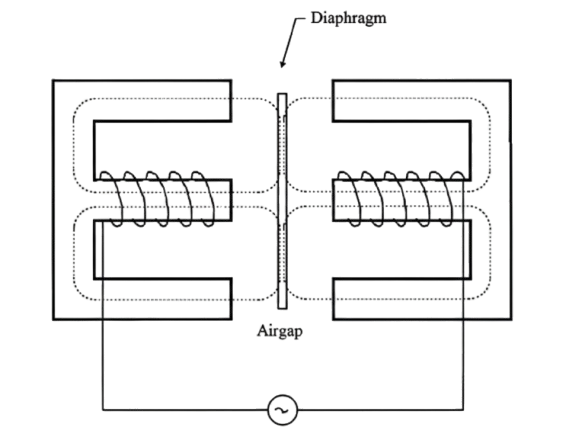
Variable reluctance is an inductive measurement method where a ferromagnetic diaphragm moves between two coils. As pressure changes, the diaphragm deflects — altering the coil impedance. This change creates a differential voltage output proportional to the applied pressure. The signal from a variable reluctance pressure sensor is typically 5 to 10 times greater than that of a strain gage sensor.
In simpler terms:
Pressure → Diaphragm Movement → Impedance Change → Accurate Pressure Signal
Because the magnetic field around the coils changes, rather than a foil strain element being stretched, VR sensors can endure millions of cycles without degradation.
What Makes VR Sensors Different from Strain-Gauge Sensors?
-
- A Metal Diaphragm Instead of a Bonded Strain Element
VR sensors use a solid magnetically permeable stainless-steel (or exotic-alloy) diaphragm. There is no glue, no foil, and no fragile strain element. This gives VR sensors:
-
-
- Long fatigue life
- High Sensitivity to Low Differential Pressures
- Fast Dynamic Response
- Better thermal stability
- Outstanding Resistance to shock, vibration, and EMI
-
-
- Extremely Low Ranges Without Hysteresis Problems
Because the sensing diaphragm does not have strain gages bonded to it, Validyne can manufacture diaphragms with micro-inch deflection capability. This allows Validyne to achieve:
-
-
- High signal output for very low differential pressures –
- Full Scale Output for pressures as low 0.1-inch H₂O, full scale
- Accuracy available to 0.1% Full Scale
- Very high stability over long periods
- Excellent repeatability
-
-
- High-Line Differential Pressure Capability
Several VR sensor models can tolerate thousands of PSI line pressure while reading very low differential pressures. That’s why aerospace and hydraulics engineers rely on VR where strain gage units deform or rupture.
Why do Aerospace, Medical, and Industrial Engineers Still Choose VR?
High Sensitivity to Low Pressures
-
- Full Scale Pressure ranges to 0.1 In H2O
Fast Dynamic Response
-
- Flat Response to 100 Hz in Air, 4X faster in water
EMI Immunity
The magnetic circuit and AC-excited coils naturally reject EMI/RFI. This makes VR sensors perfect for:
-
-
- Jet engine test cells
- Missile guidance/actuator systems
- High-power industrial plants
-
Long-Term Drift Resistance
Since the diaphragm is solid metal, it is not subject to creep or adhesive breakdown, minimizing long-term drift.
High Customizability for Small Orders
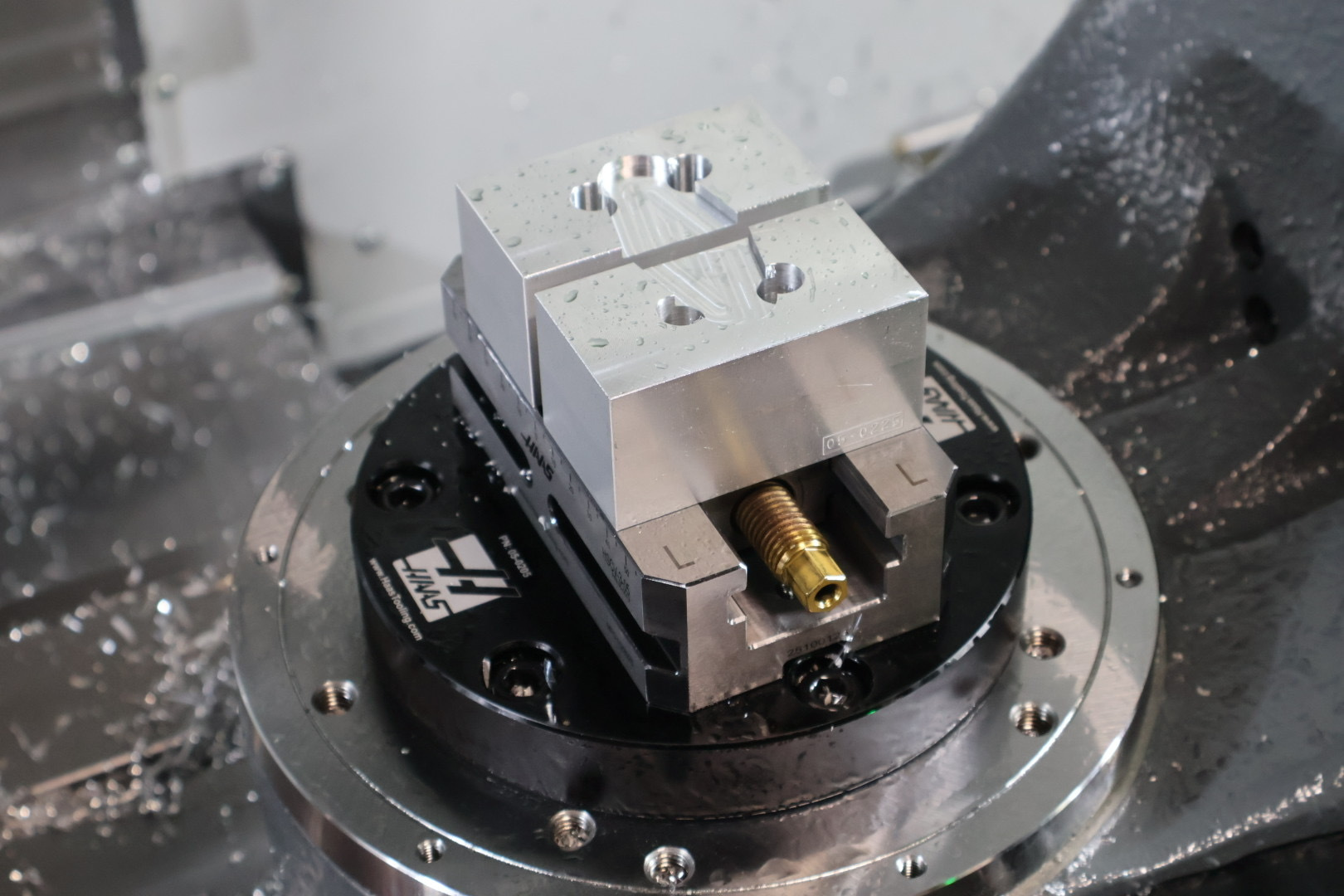
Validyne (machines) manufactures all diaphragms in-house, allowing engineers to choose:
-
-
- Diaphragm thickness
- Sensor Body Material (316, Inconel, Hastelloy, etc.)
-
Note: Diaphragms are all 410 SST
-
-
- Full Scale Pressure range
- Pressure Port configuration
- Electronic output signal
- Environmental packaging
-
Few pressure sensor companies offer this level of customization.
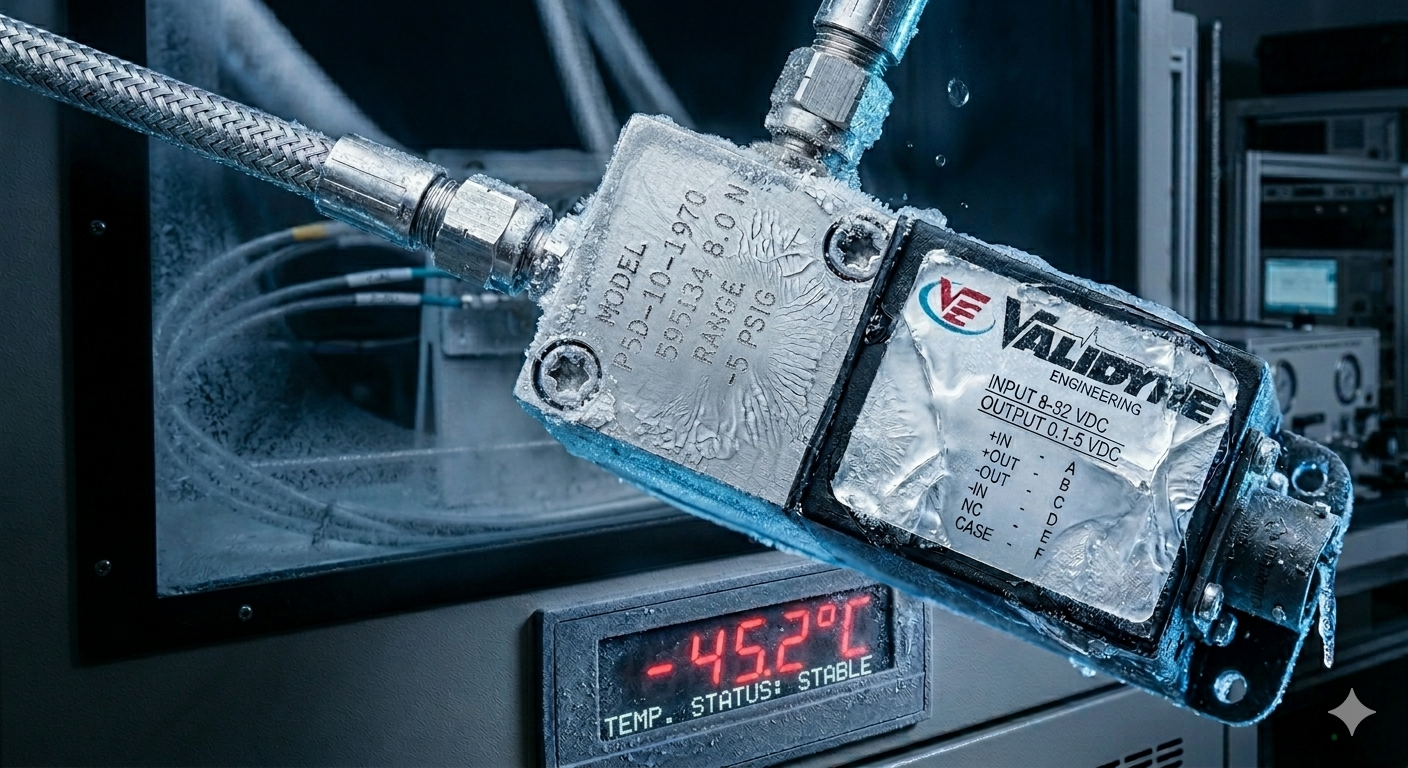
Variable reluctance sensing is a time-tested technology that continues to outperform newer alternatives in the harshest environments. Validyne’s VR pressure sensors provide unmatched durability, stability, and adaptability — making them the ideal choice for engineers who demand reliability (over novelty).


Leave a reply
You must be logged in to post a comment.