Pressure Measurement, University, Utility
How to Plumb a Pressure Transducer for Safe Removal
Proper valve arrangements let you install, remove, or service a transducer without shutting down your system, and without risking damage to the sensing element.
Gauge Pressure Applications (PSIG)
If you’re using the transducer for gauge pressure measurement, where one port is open to atmosphere, install a simple shutoff valve in the pressurized line. On the open port of a differential pressure transducer, use a porous filter to keep out dirt and dust, a plastic cap with a small hole or a loose plug of fine wire mesh works fine.
Differential Pressure Applications at High Static Line Pressure
Low DP measurements across an orifice or filter at high static line pressure require more careful valving. This is where damage most commonly occurs: if one side of the transducer is suddenly exposed to full system pressure while the other side is still at atmosphere, the sensing element will likely be damaged or destroyed.
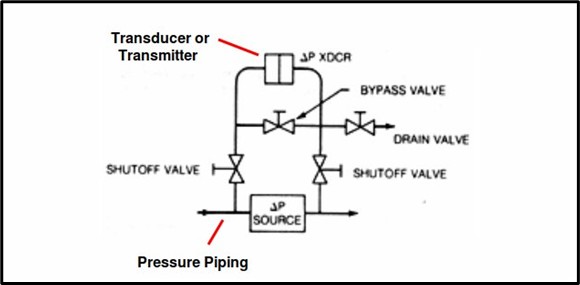
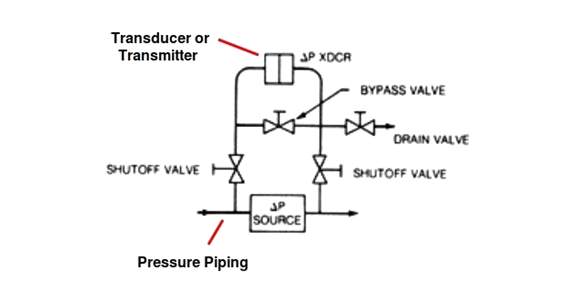
To protect the transducer, use a three-valve manifold arrangement with two shutoff valves and a bypass valve with a drain, as shown in the diagram below.
Pressurize the transducer safely:
- Close the drain valve and open the bypass valve.
- Open both shutoff valves to equalize pressure on both sides of the transducer.
- Close the bypass valve.
Depressurize and remove the transducer:
- Open the bypass valve.
- Close both shutoff valves.
- Slowly open the drain valve and allow pressure to bleed off completely.
- Once fully depressurized, disconnect the plumbing.
⚠️ Always open the drain valve slowly. Rapid depressurization can cause pressure spikes that damage the sensing element.
Three-valve manifolds for this purpose are widely available from commercial valve and fitting suppliers.
Getting the plumbing right is just as important as choosing the right sensor. A proper valve arrangement protects your investment, keeps your system running during maintenance, and prevents the kind of overpressure events that can permanently damage a sensing element. Whether you’re setting up a simple gauge pressure line or a high static DP installation, taking the time to valve it correctly pays off every time you need to service the transducer.
If you’re unsure which configuration applies to your system — or need help selecting a transducer rated for your static line pressure and differential range, Validyne’s engineering team is happy to help. Contact us →
Related posts

Aerospace, Pressure Measurement
Preventing Pressure Port Contamination – Best Practices for Long-Term Performance
Pressure port contamination is one of the most common — and preventable — causes of sensor failure. Dust, oil mist, particulates, biological debris, or corrosive materials entering the pressure ports…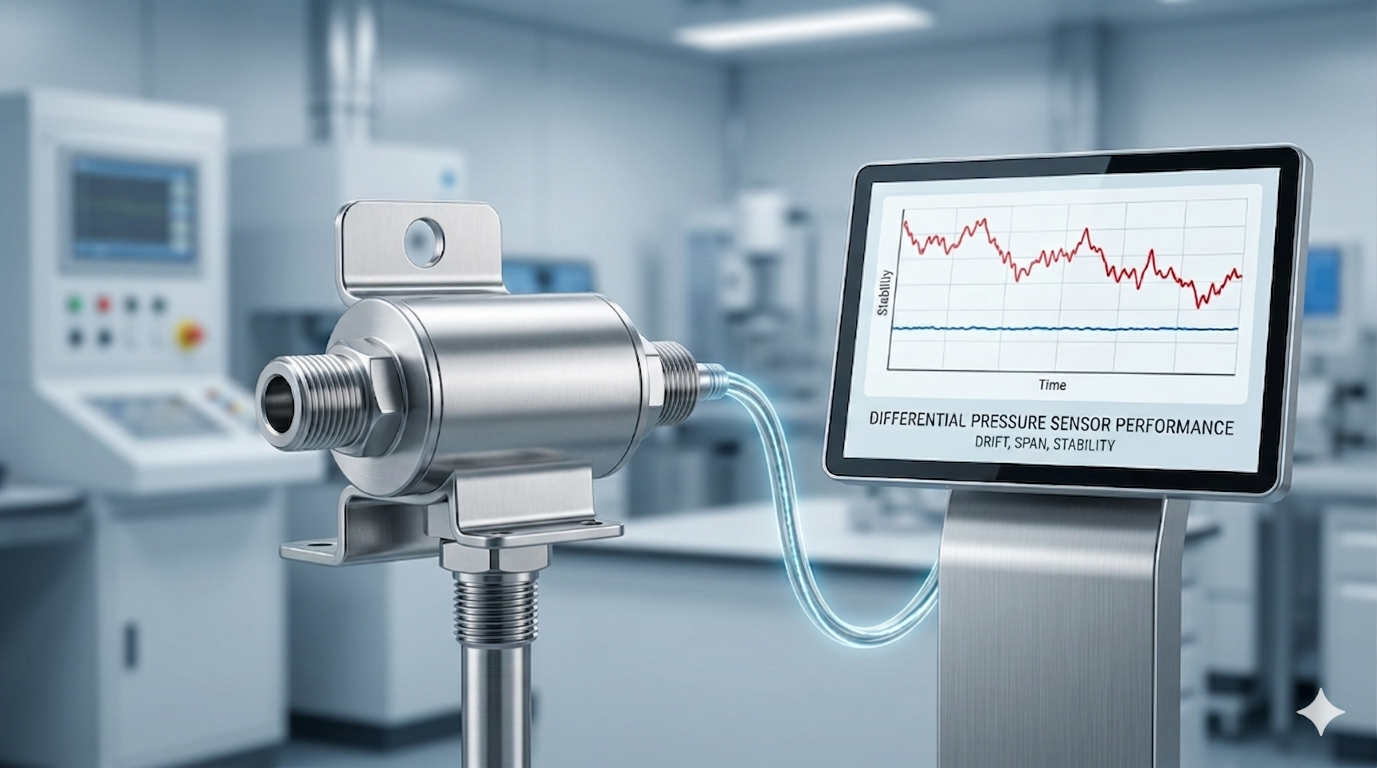
Aerospace, medical, Pressure Measurement
Understanding Zero Drift, Span Shift & Long-Term Stability and Differential Pressure Sensors
Pressure sensor accuracy isn’t determined only at the moment of calibration. Over days, weeks, or years, every pressure sensor experiences some degree of zero drift, span shift, and long-term stability…
Aerospace, Automotive, Data Acquisition, Military, Oil & Gas, Pressure Measurement, University, Utility
Inside Validyne Manufacturing: How Precision Manufacturing Improves Sensor Quality and Lead Time
Why In-House Machining Makes the Difference One of Validyne’s biggest advantages, and one that most sensor companies cannot match, is that we machine almost every metal component of our sensors…
Aerospace, Pressure Measurement
How to Calibrate Differential Pressure Sensors in Extreme Cold
Calibrating pressure sensors at very low temperatures, especially below -20°C, is a challenge for many manufacturers. Metals contract; mechanical stresses intensify causing traditional strain-gauge sensors to drift significantly. Validyne’s VR-based…
Aerospace, Pressure Measurement
Validyne Engineering Achieves ITAR Registration
We’re now officially registered under the International Traffic in Arms Regulations — expanding our ability to serve the defense and aerospace programs that depend on precision instrumentation. Validyne Engineering has…Comments are closed