
Pressure Measurement
Glass Furnace Draft Measurement with the Validyne DR800
Why Draft Pressure Matters in Glass Furnaces
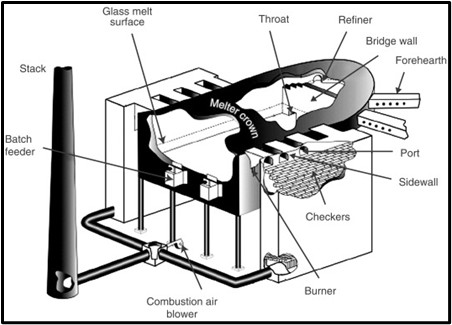
Industrial glass production relies on massive furnaces designed for continuous, high temperature operation. Every year, millions of tons of glass are produced, including container glass (53%), flat glass (22%), and pressed or blown glass (25%). Large glass furnaces maintain melting temperatures above 1500°C, powered by natural gas burners.
These furnaces rage in capacity from a single ton to over 2000 tons, with daily throughputs reaching more than 1000 tons of glass. To maintain such demanding production, precise combustion air control is essential. Fuel costs make up a major portion of operating expenses, and the wring air/fuel balance can either increase emissions or disrupt melting temperatures.
This is why glass furnace draft measurement is critical.
Challenges of Measuring Glass Furnace Draft Pressure
Draft pressure inside a furnace controls how combustion air is drawn into the system-similar to how a chimney pulls air into a fireplace. In glass furnaces, draft pressures are extremely low (typically less than 0.25 in H20) and must be carefully managed by blowers and venting systems.
The challenge:
- Low pressure ranges make measurement difficult
- Extreme heat environments around the furnace strain sensors
- Accurate control is required to optimize combustion efficiency
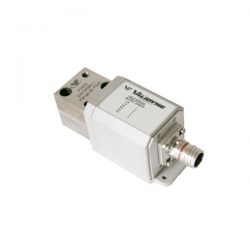
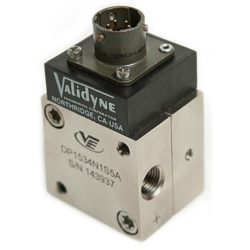
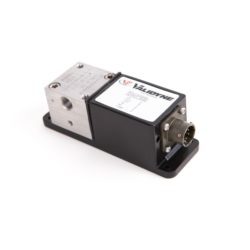
The Validyne DR800 Draft Range Differential Pressure Transmitter was specifically designed for these challenges and has become a standard solution in many glass plants worldwide.
Why the Validyne Draft Range DR800 pressure transmitter excels in Glass Furnace Draft Measurement
Ultra-Low Pressure Range
- Available in full-scale ranges as low as ±0.25 in H20
- Uses variable reluctance sensing technology, delivering 10x the signal strength of strain gauge sensors
- Provides stable, accurate readings without excessive amplification
Rugged Industrial Housing
- NEMA 4 housing with a junction box and ½” NPT conduit connections
- Built with heavy-duty materials that absorb rapid temperature changes
- External zero and span adjustments for easy calibration
Offset Calibrations & Span Turn Down
- Supports both positive and negative draft pressures relative to ambient air
- Example calibration: -0.05 in H20 = 4 mA, +0.15 in H20 = 20 mA
- Turn down span 2.5x, allowing precise measurement of extremely small ranges (as low as 0.1 in H20)
Selectable Damping
- Adjustable damping with time constants from 0.25 to 8 seconds
- Smooths noisy furnace airflow signals for more reliable control
Standard Process Connections
- ¼” female NPT ports (adapters available for ½” NPT)
- Port spacing on 2-1/8″ centers for compatibility with 3-valve manifolds
- Optional 2″ pipe mounting bracket
FM Approved for Hazardous Locations
- Certified for Class I, Div 2, Groups B, C, and D environments
HART Communication Protocol
- Full HART support for remote monitoring and configuration
- Access key transmitter parameters digitally, including:
- Output current and range percentage
- Device tag, descriptor, and messages
- Range values, engineering units, and damping constants
Optimizing Glass Furnace Efficiency with the DR800
Accurate glass furnace draft pressure measurement is essential for maintaining combustion efficiency, lowering fuel costs, and reducing emissions. The Validyne DR800 draft range differential pressure transmitter combines rugged design, ultra-low-pressure capability, and advanced communication features, making it the trusted choice for glass manufacturers worldwide.
Learn more about the Validyne DR800 Draft Range Differential Pressure Transmitter and how it can improve your furnace draft measurement system


Leave a reply
You must be logged in to post a comment.