Data Acquisition
Why Data Centers Need Precision Differential Pressure Sensors and How to Choose the Right One
Data centers are, at their core, thermodynamic challenges. Every watt of computing power generates heat, and that heat has to go somewhere — fast, reliably, and efficiently. The infrastructure that manages that thermal load depends heavily on reliable airflow, and measuring airflow means measuring pressure. Specifically, differential pressure.
Whether you’re a facilities engineer maintaining a hyperscale cloud campus or a test engineer validating a new cooling architecture, precision differential pressure (DP) sensors are a tool you can’t afford to get wrong.
The Pressure Points in a Data Center
Data centers present several distinct measurement challenges, each requiring its own pressure range and performance characteristics:
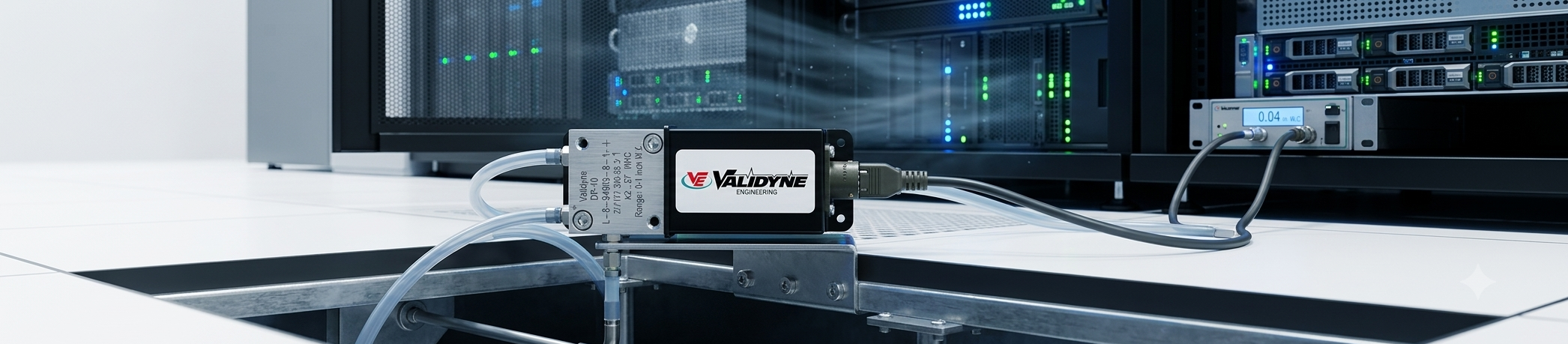
- Raised floor plenum pressure. The pressurized raised floors in a typical data center distribute cold air to the server aisles. Typical operating pressures in these systems range from01–0.10 in. W.C, Plenum pressure monitoring requires ultra-low range sensors with excellent stability. Even small pressure and flow imbalances can create hot spots that degrade equipment life.
- Filter and heat exchanger differential pressure. CRAC and CRAH units rely on DP sensors across air filters and coils to detect fouling and trigger maintenance. A clogged filter reduces airflow, inhibits cooling and raises PUE (Power Usage Effectiveness) — a direct hit to operating costs.
- Fan and blower performance validation. In both server-level and facility-level cooling, DP measurements across fans confirm that airflow targets are met. Detecting a drop in DP can indicate identify fan degradation or blockage before it becomes a thermal event.
- Chiller and water loop pressure monitoring. Liquid cooling systems — increasingly common as equipment rack densities climb with AI workloads — require DP sensors to monitor pump performance, pipe flow, and heat exchanger efficiency.
- Containment zone pressure differential. Hot aisle/cold aisle containment depends on maintaining precise pressure differentials between zones. Sensors that drift or exhibit hysteresis errors undermine the entire containment strategy.
What Makes a DP Sensor “Right” for Data Center Use?
Not all pressure sensors are created equal. The data center environment is demanding in specific ways:
- Ultra-low range capability. Many critical data center measurements fall below 1 inchC. (0.25 kPa). Sensors optimized for higher-pressure industrial applications lose resolution and accuracy at these low pressure levels. You need sensors designed from the ground up for low-DP service.
- Long-term stability. A sensor that drifts over months quietly corrupts your cooling control loops. Stability — especially zero-point stability — is non-negotiable in continuously monitored systems.
- Low hysteresis. Airflow fluctuates constantly. A sensor with significant hysteresis will lag on recovery, masking real changes in airflow that matter to your thermal model.
- Configurable output. Modern data center BMS and DCIM platforms expect standard analog (4–20 mA, 0–5 V) or digital outputs. Sensor selection should match the integration requirements of your monitoring infrastructure.
- Robust construction. Data center environments are relatively benign compared to aerospace or industrial settings, but sensors still need to handle vibration from nearby equipment, humidity variation, and years of continuous operation.
The AI Infrastructure Boom Changes the Calculus
The rapid buildout of AI training and inference infrastructure is reshaping data center design. GPU clusters running at 10–30 kW per rack — and climbing — have made thermal management far more demanding than traditional server deployments. The margin for error in airflow management is significantly reduced.
This means more sensors, more monitoring points, and higher measurement performance requirements. It also means that test engineers validating new cooling architectures — rear-door heat exchangers, in-row cooling, direct liquid cooling, immersion systems — need reliable DP instrumentation to generate data they can trust.
Whether you’re commissioning a new hyperscale facility or developing the next generation of cooling infrastructure, your differential pressure measurement strategy deserves the same attention as the rest of your design.
Validyne’s Approach to Low-DP Measurement
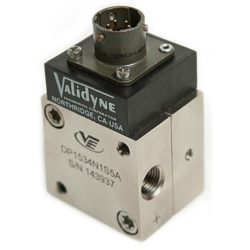
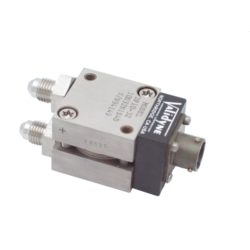
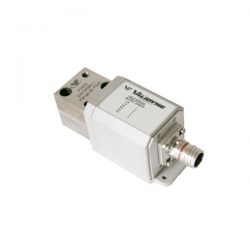
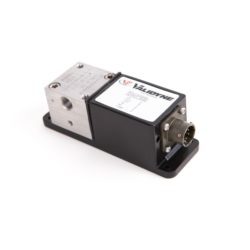
Validyne Engineering has been designing and manufacturing precision differential pressure sensors and instrumentation since 1968. Our variable-reluctance sensing technology was developed specifically for low-range, high-accuracy differential pressure measurement — the kind of performance that data center airflow monitoring demands.
Our sensors and transducers offer:
- Ranges from 0.008 psi to 3,200 PSI — scalable to your application
- Replaceable sensing diaphragm for easy range changes in the field
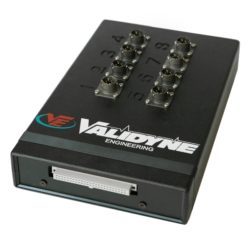
- Analog signal conditioning modules and digital USB/Ethernet output options
- Long-established track record in aerospace, defense, and high-precision research applications
- Made in the USA with AS9100-registered quality management
Talk to an Engineer
If you’re designing a new cooling monitoring system, validating a data center cooling architecture, or simply looking to upgrade aging instrumentation, we’d like to understand your application. Validyne engineers are available to discuss your pressure range requirements, output signal needs, and integration constraints.
Contact us to speak with an applications engineer.
Related posts
Aerospace, Data Acquisition
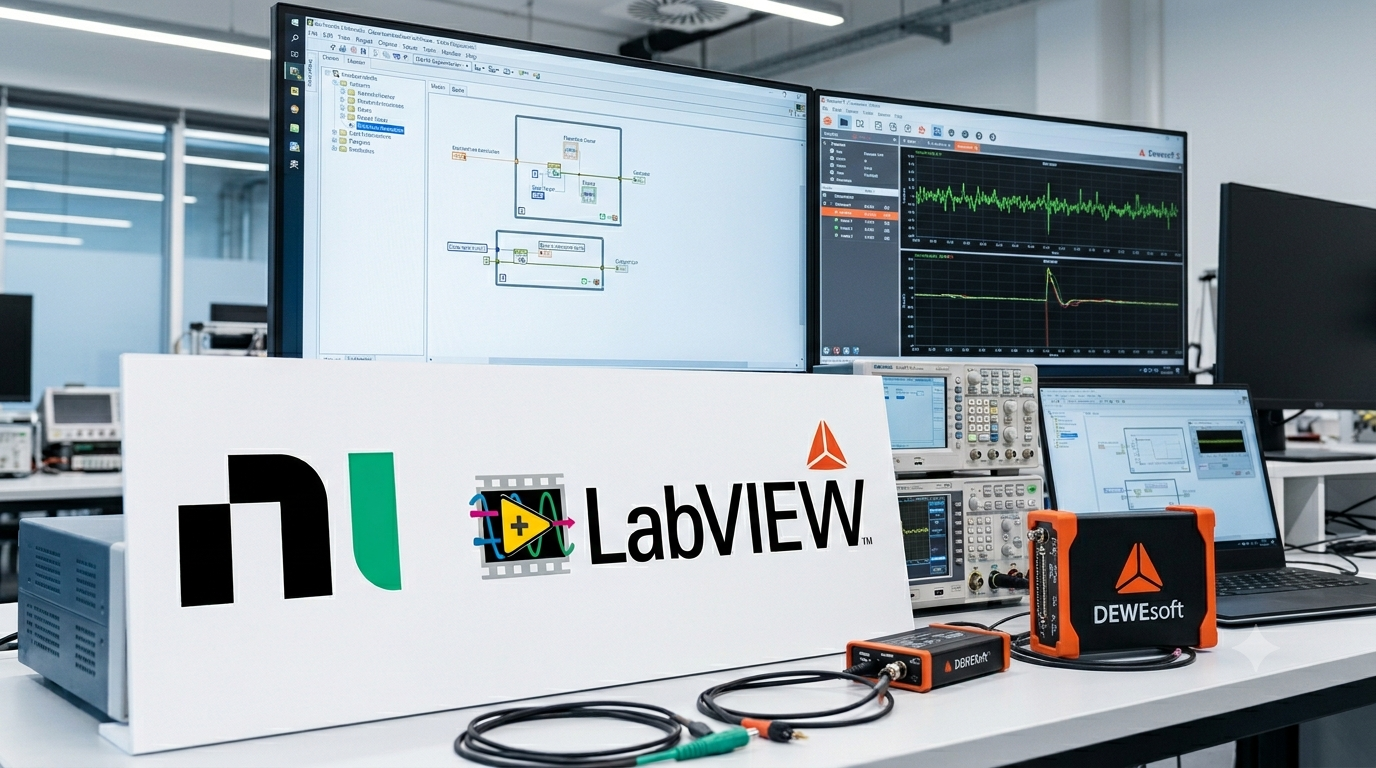
How to Integrate Validyne Pressure Sensors With NI, LabVIEW & Dewesoft
Many pressure measurement applications rely on software ecosystems like NI LabVIEW, NI DAQ hardware, or Dewesoft acquisition systems. Validyne VR sensors integrate seamlessly into these environments — but successful integration…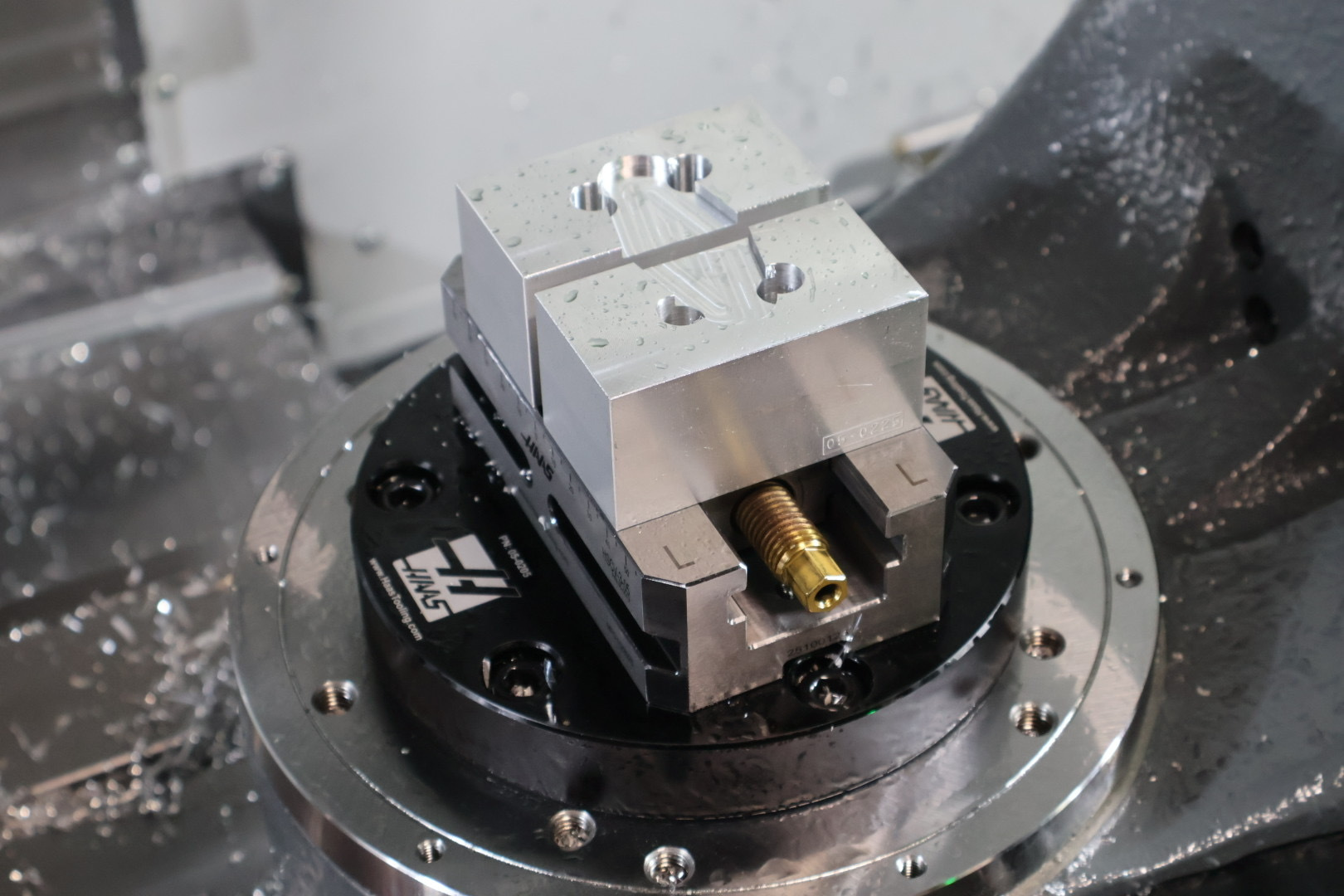
Aerospace, Automotive, Data Acquisition, Military, Oil & Gas, Pressure Measurement, University, Utility
Inside Validyne Manufacturing: How Precision Manufacturing Improves Sensor Quality and Lead Time
Why In-House Machining Makes the Difference One of Validyne’s biggest advantages, and one that most sensor companies cannot match, is that we machine almost every metal component of our sensors…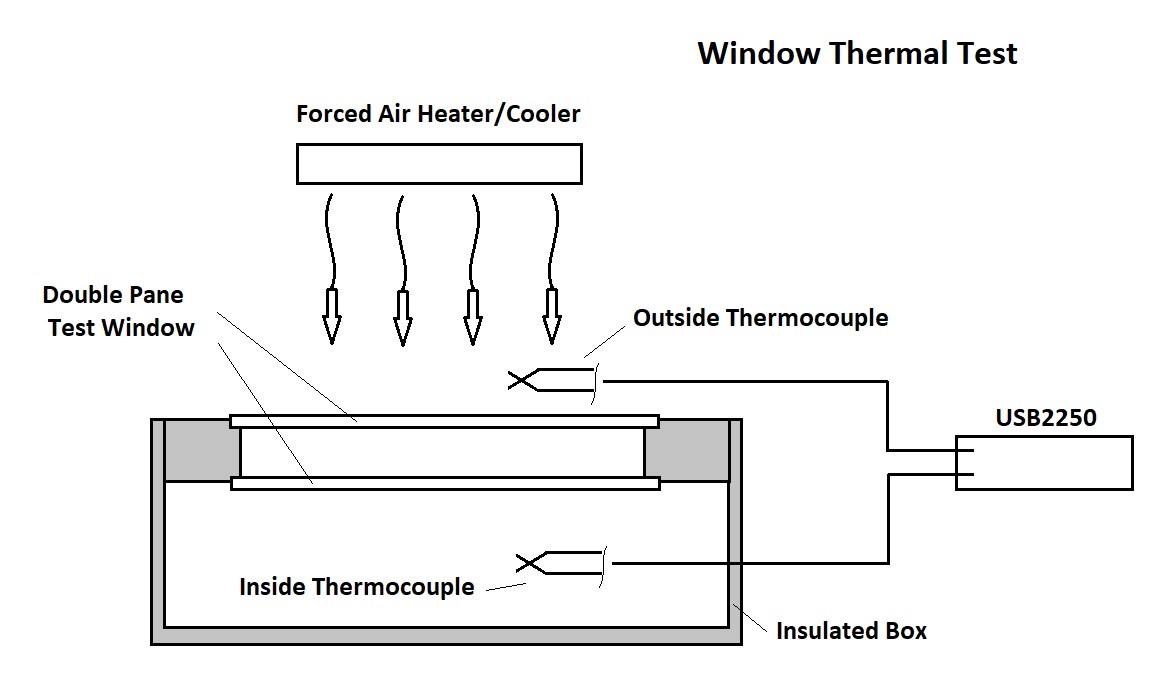
Construction, Data Acquisition, University
Window Thermal Efficiency Testing
Energy efficient windows are an important consideration for both new and existing homes. According to the Department of Energy, heat gain and heat loss through windows are responsible for 25%–30%…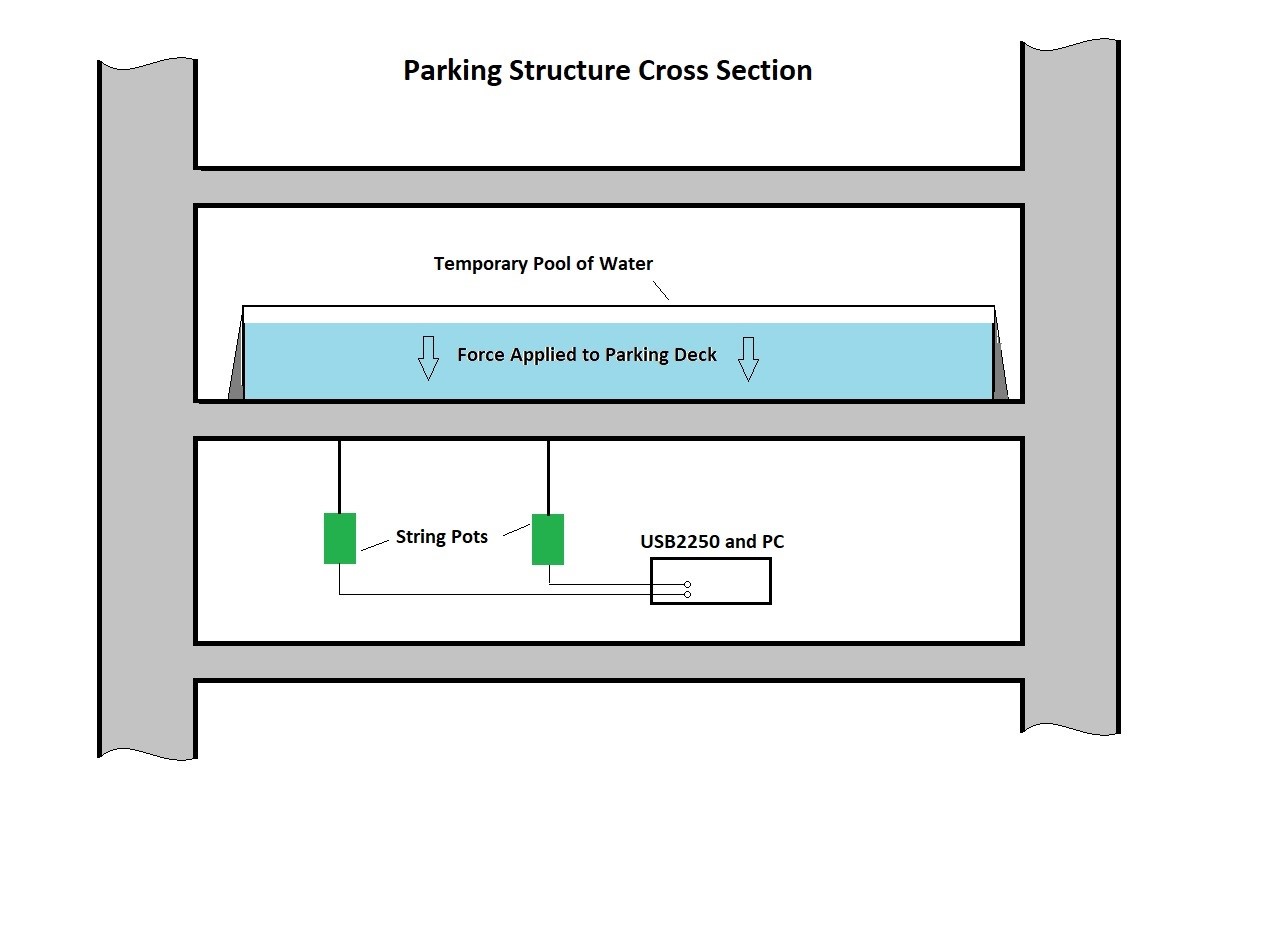
Construction, Data Acquisition, Design, Military, Utility
Static Load Structural Testing
Structures that must bear weight or force are tested after construction by applying a static load and measuring the deflection of the structural elements. The deflections must be within permissible…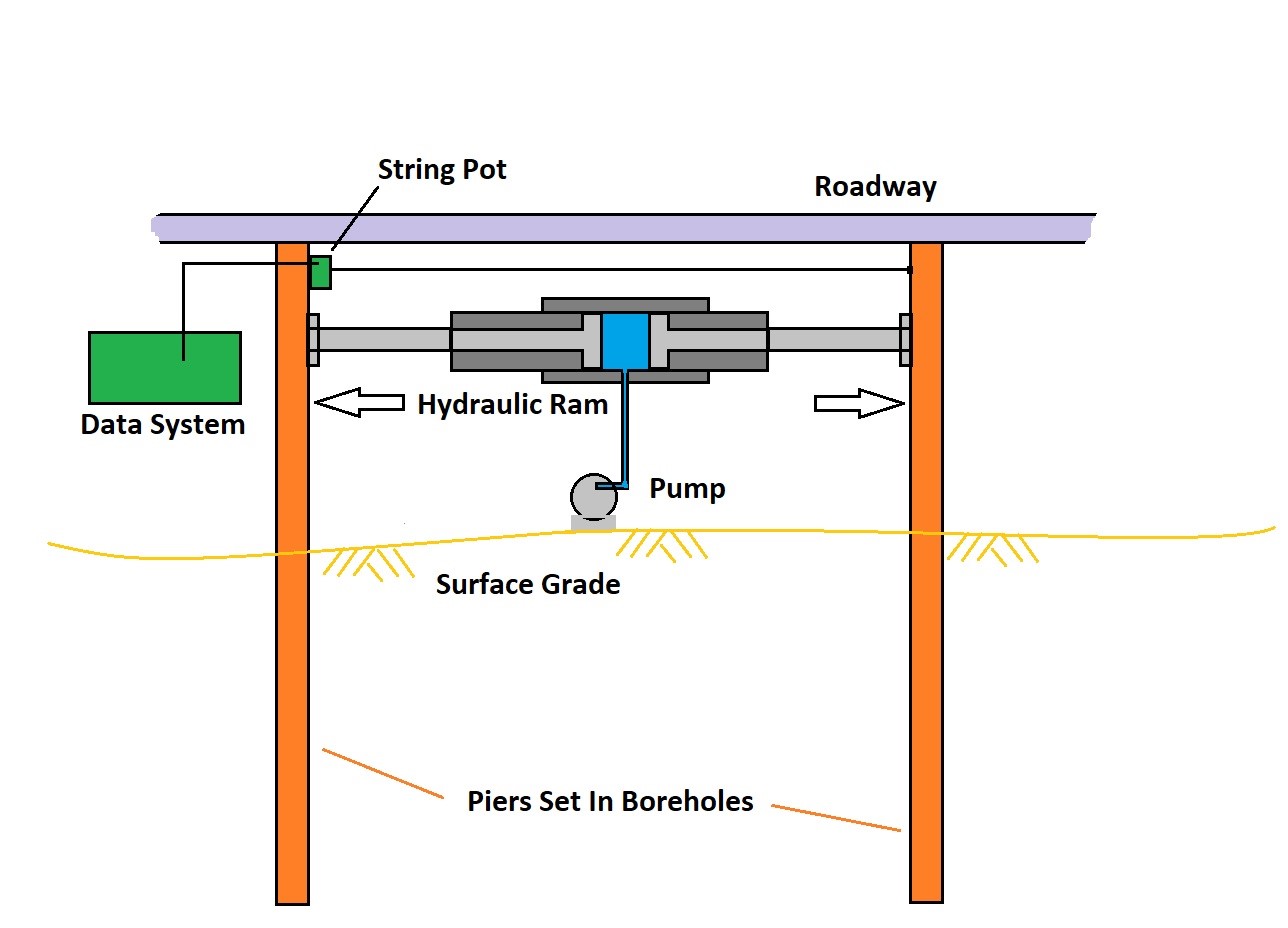
Data Acquisition, Utility
Elevated Highway Column Testing
Elevated highways are common in new road construction. The road bed is raised above the land surface by columns, or piers, set deep in the ground. This is advantageous in…Comments are closed